


 October in your Vegetable garden in Portugal
 Things to do in November in your Veg Garden in Portugal.
 March is a busy time down in the veg patch.
 Things to do in September in your garden in Central Portugal.
 Things to do in the Veg. garden in July and August.
 There are lots of beaches in central Portugal, we have picked out 10 of our favourites. They are a mix
 Óbidos Chocolate Festival takes place around March/April each year.
 One of biggest Motorbike Festivals in Portual
 Preparations for the Festa start early in Tomar.
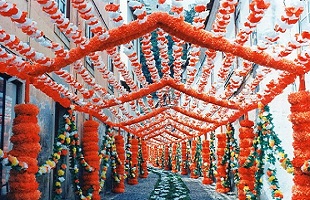 In the second of Hey Portugal's series about “Festa dos Tabulerios” in Tomar Sylvia and Peter take a look at
 Meatballs with Endive and Potato Puree
Here a very easy recipe for a typical Dutch dish.
Meatballs with Endive and Potato Puree
Here a very easy recipe for a typical Dutch dish.
 A Greek recipe which is great for serving for a picnic, at a summer BBQ or as a starter.
 Here is the recipe you have all been waiting for. For all of you who miss tinned baked beans read
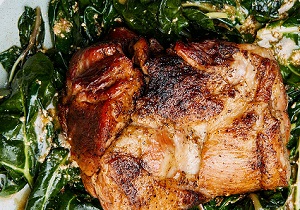 Milk Braised Pork
Great Sunday Lunch or Family gathering.
Milk Braised Pork
Great Sunday Lunch or Family gathering.
 Fish with Pesto Roasted Peppers and Tomatoes
This recipe is simple but very tasty and filling.
Fish with Pesto Roasted Peppers and Tomatoes
This recipe is simple but very tasty and filling.

Coffee is drunk in Portugal throughout the day, but what is the facination?
What is coffee?
Coffee is a drink prepared from roasted seeds, commonly called coffee beans. The seeds are actually coffee cherries that grow on trees in over 70 countries around the World. Green (unroasted) coffee is one of the most traded agricultural commodities in the world. 
The earliest credible evidence of coffee drinking appears in the middle of the fifteenth century, in the Sufi monasteries of the Yemen in southern Arabia.
From the Muslim world, coffee spread to Italy, then to the rest of Europe, to Indonesia, and to the Americas. Coffee has played an important role in many societies throughout history.
When the Moors invaded Portugal they brought along coffee and the drinking of it here has developed ever since. There are so many different ways of drinking coffee in Portugal that you could be spoilt for choice but you will soon find your favourite.
Coffee Options
In Portugal, by far the most popular coffee is an espresso. In Lisbon you would order uma bica and in Porto um cimbalinho, elsewhere else um café. Here are some more of the popular choices;
For a large black coffee/americano um abatanado
Instant coffee um Nescafe
A double espresso um café duplo
Milky coffee, um galão (is served in a tall glass and is about 3/4 milk. Traditionally made with a second passing of coffee from the machine and is very weak)
If you prefer something more like a Caffe latte, then ask for um galão directo (first press coffee it will be stronger)
The most common coffee for ex-pats is made with half milk and served in a regular coffee cup, this is um meia de leite (literally half milk)
As the espresso style is the most popular, and the machines to make them expensive, it is obvious why the Portuguese people are seen in their local café with just a coffee. It is possible to buy stove top percolators from the markets and supermarkets in Portugal, and they make a reasonable cup of coffee, only used at home when the cafes are closed. But nothing beats the strong, almost black liquid that is forced from the beans under immense pressure in a real espresso machine.

When a coffee cost 50-70c and an expresso machine 500-1000€ then a walk to the local café seems a very sensible option.
Coffee is drink in the morning at cafes and petrol stations as people are travelling to work. At lunchtime and after dinner it may be accompanied with a Aguardent; usually added to the coffee cup.
Portugal is a very sociable country and having a coffee is also a time to say hello to friends and neighbours. It is very much part of the culture here, and what you will not see is people rushing around town with a paper, lidded cups, with no time to talk. Here, coffee is quick but its also slow! To take a coffee Tomar um cafe, is about taking just a moment to stop and think.
Try it traditional, you might like it.